

Starlink · Bonding
Combine Starlink links for resilient connectivity.
Use multiple Starlink connections as part of a managed WAN architecture to improve continuity and, with an appropriate bonding design, distribute traffic across links. Mobilware can help deliver the on-site network equipment, tunnel architecture and central termination infrastructure needed for the selected approach.
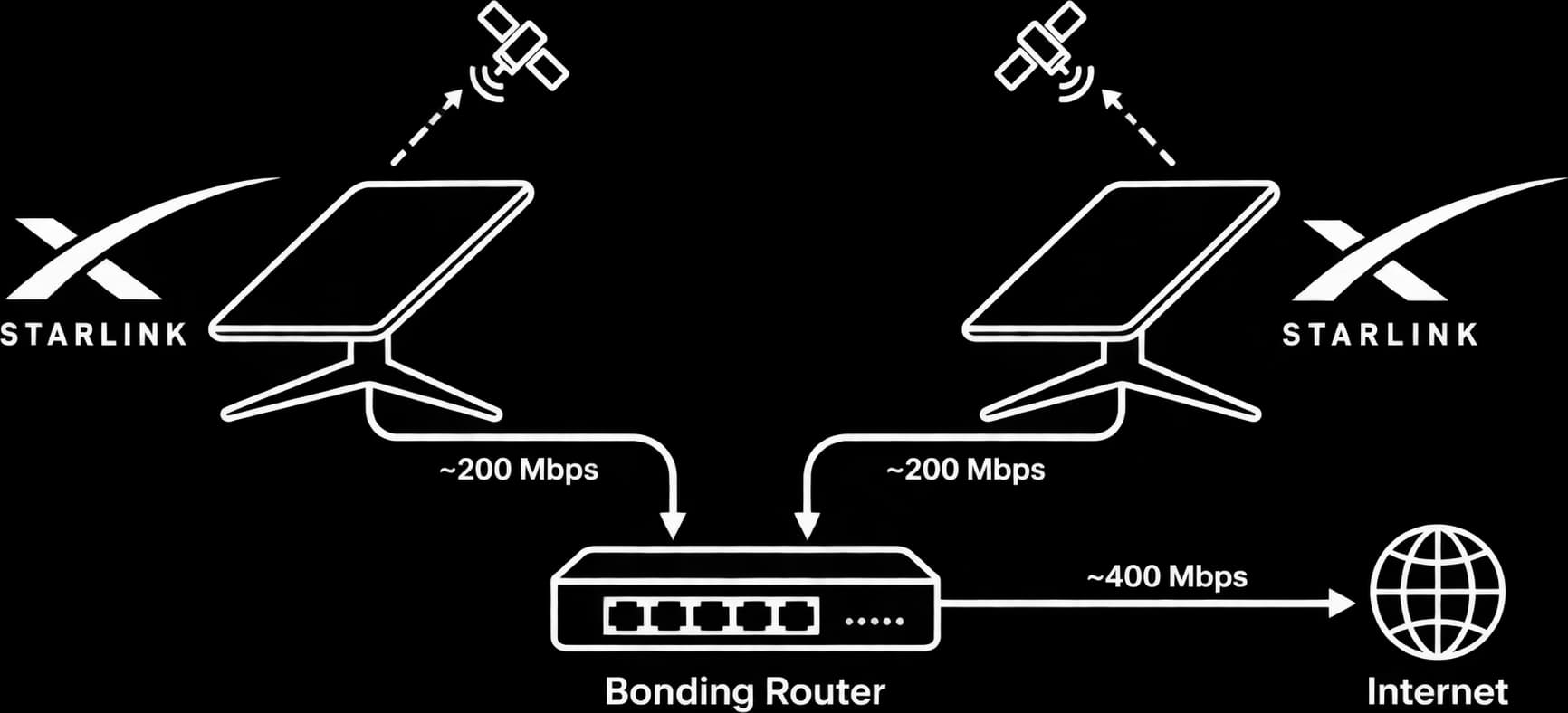
True Bandwidth Aggregation
2x Starlink = 2x the speed. Add LTE for even more throughput and redundancy.
Seamless Failover
If a WAN goes down, active sessions continue uninterrupted on remaining links. Zero dropped calls.
QoS Traffic Prioritization
Voice, video, and critical apps get priority. Bufferbloat eliminated with SQM.

Capabilities
What we deliver

MPTCP Bonding
True packet-level aggregation combines bandwidth from all connections for maximum throughput.
Any WAN Source
Bond Starlink, LTE/5G, fiber, cable, DSL — any internet connection type works together.
Zero-Downtime Failover
Active sessions survive WAN failures. Voice calls and video streams continue without interruption.
QoS & Traffic Shaping
Prioritize voice, video, and critical applications. SQM eliminates bufferbloat for smooth performance.
VPN Encryption
All traffic encrypted through our secure tunnel servers. Enterprise-grade security built in.
Remote Management
We monitor and manage everything remotely. Firmware updates, config changes, troubleshooting — all handled.
How it works
Failover, load balancing and bonding — the difference
- 01
Failover
One link carries traffic; the other takes over if it fails.
- 02
Load balancing
Different sessions use different links. A single session still uses one link.
- 03
True bonding
Traffic is split across links per flow or per packet and recombined at a remote aggregation endpoint.
- 04
Selection
We recommend the approach after reviewing applications, sites and budget.
Bonding architecture. Links: Starlink 1, Starlink 2 → Site: Managed edge → Transport: Encrypted path 1, Encrypted path 2 → Core: Bonding endpoint → Destination: Internet, Customer VPN
Why it matters
When One Connection Isn't Enough. And Failure Isn't an Option.
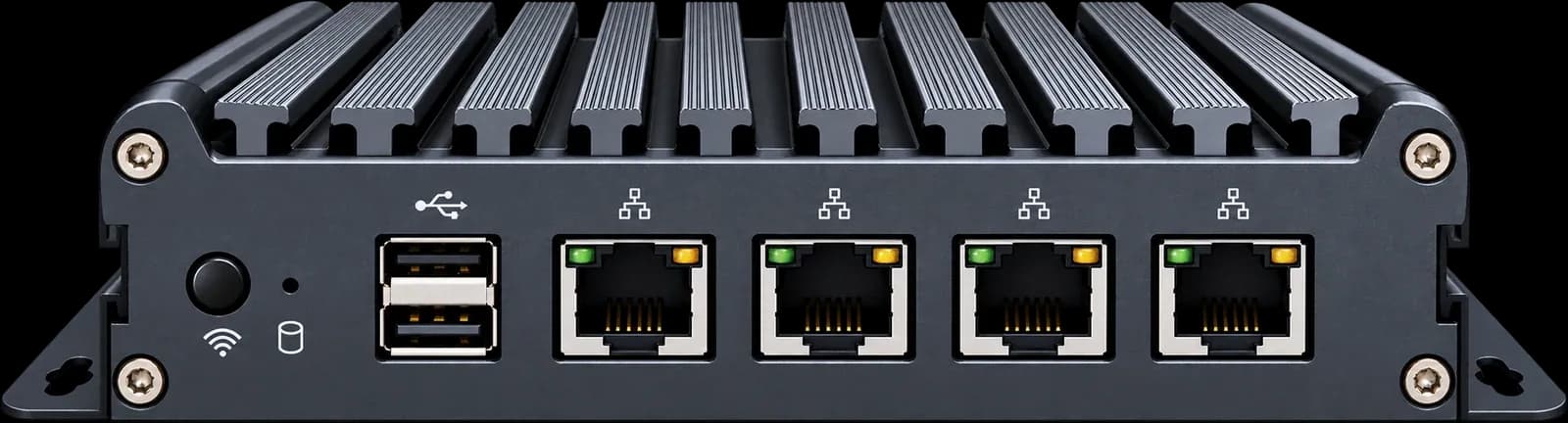
Mission-critical operations can't afford downtime. This dual-Starlink bonding solution doesn't just boost throughput — it builds resilience into every packet. If one terminal degrades or drops, traffic seamlessly flows through the other, keeping you online when it matters most. Open-source OpenMPTCProuter handles the intelligence, running on a compact mini PC with a cloud VPS completing the link on the land side. No single point of failure. No proprietary lock-in. Just robust, always-on connectivity designed for remote sites, mobile deployments, and operations where staying connected is non-negotiable. Mobilware monitors both links around the clock.
Break the Bandwidth Ceiling. Scale Without Limits.
Single-connection satellite internet has a ceiling. Bonding two Starlink terminals shatters it. By aggregating both links into one high-throughput pipeline, this solution delivers the speed and capacity that data-intensive operations demand — streaming, cloud workloads, large file transfers, and more. Built on open-source OpenMPTCProuter and deployed via an affordable mini PC with cloud-based land-side aggregation, it's a cost-effective alternative to expensive enterprise circuits. Add capacity as you grow, swap hardware freely, and never be locked into a proprietary ecosystem. This is connectivity built to scale with your ambitions — fast, flexible, and fully in your control.
FAQ
Questions we're often asked
What is the difference between load balancing and bonding?
Load balancing assigns whole sessions to different links, so a single download still uses one link. Bonding splits traffic across links and recombines it at a central endpoint, so a single session can use the combined capacity — at the cost of extra equipment and overhead.
Do I need a central server?
True bonding normally requires a remote aggregation endpoint. Failover and load balancing do not.
Can bonding work with non-Starlink links?
Many bonding designs can combine different link types, such as cellular. This is assessed per project.
Building or modernizing a satellite service business?
Tell us what you need to connect, automate or monitor. Our team can help define a practical architecture — from a single integration to an end-to-end environment.